
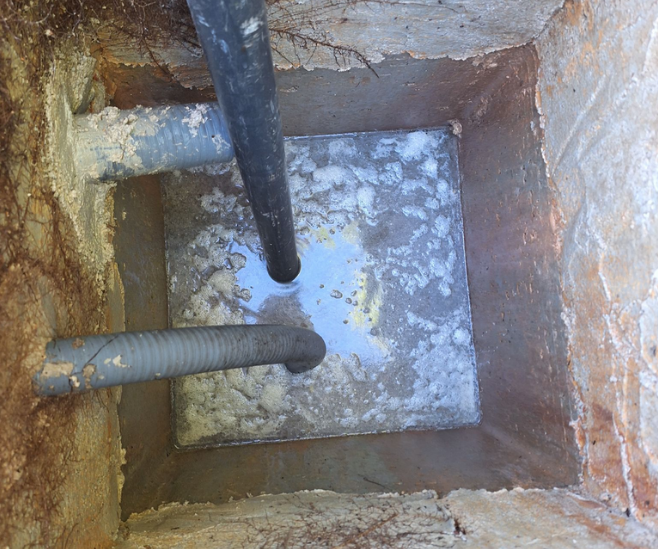
Septic tanks and wastewater holding systems are built to handle everyday use, but they are not maintenance-free. Over time, solids build up inside the tank and must be removed through professional draining and emptying. When that doesn’t happen, the system can overload and fail, often at the worst possible time, with a much bigger price tag attached.
This article breaks down what actually happens when a tank isn’t maintained, why emergency callouts become so disruptive and expensive, and how to plan a sensible draining schedule for Algarve homes, holiday rentals and rural properties.
What Happens Inside a Septic Tank Over Time
A septic tank separates waste into layers:
- Solids sink and form sludge
- Fats/grease float and form scum
- Liquids move onward to the soakaway/drainage field (or holding system)
As sludge accumulates, the tank has less working volume and waste doesn’t separate properly. The result is higher risk of solids pushing into outlet pipes, filters and soakaway systems. When that happens, problems escalate quickly.
The Common Failure Chain (How Small Neglect Turns Into a Big Repair)
When septic tanks aren’t emptied on a regular schedule, solids can build to levels that prevent the system functioning correctly.
From there, the most common failure chain looks like this:
- Flow slows down
- Drains start emptying slowly
- Toilets gurgle
- Wastewater struggles to leave the tank efficiently
- Outlet blockages form
- Solids migrate toward outlet pipes
- Filters clog
- The soakaway can start to load with solids
- Backups and overflows start
- Wastewater can back up into the property
- Surface flooding and foul odours can appear around the drainage area
- Environmental and property damage risk increases
- Contamination risks rise
- Pumps or filtration components can be damaged
At this stage, what would have been a routine emptying becomes a multi-step investigation and repair.
Why Emergency Failure Costs More Than Routine Draining
Routine septic tank draining is designed to remove accumulated solids before they cause blockages or overload.
Emergency failures, on the other hand, often require a combination of work that adds labour, machinery, and property disruption.
Routine Draining and Emptying Usually Involves
- Pumping out sludge and scum
- Basic checks on inlet/outlet condition
- Identifying early warning issues before they become failures
- Quick turnaround, minimal disruption
Emergency Failure Can Involve (and This Is Where Costs Grow)
When a system fails due to lack of maintenance, repairs may require extensive investigation and repair works.
Emergency scenarios can include:
- Drain excavation to locate blockages
- Soakaway or drainage field replacement
- Pump repairs or replacement
- Tank cleaning and system flushing
- Ground contamination treatment
- Significant disruption to the property and surrounding areas
Emergency repairs may also involve excavation, ground reinstatement and landscaping, environmental clean-up, and extended labour and machinery costs.
That’s why, in most cases, regular septic maintenance costs far less than emergency drainage repairs or replacement of drainage infrastructure.
Warning Signs Your Tank Needs Attention Soon
If you spot any of the below, don’t wait for the system to fail:
- Drains empty slowly across multiple rooms
- Toilets flush poorly or “bubble”
- Foul odours outside near the tank or soakaway
- Wet patches or pooling water near the drainage field
- You’ve had a sudden spike in callouts for blockages
- You can’t remember the last time the tank was emptied
How Often Should You Empty a Septic Tank in the Algarve?
There’s no single schedule that fits every property. Frequency depends on:
- Household size and usage (full-time home vs holiday use)
- Tank capacity
- Whether it’s a true septic system or a holding tank
- Grease and solids load (kitchen-heavy properties)
- Whether you have pumps/filters that need protection
A practical approach is:
- Start with a baseline emptying schedule
- Adjust based on how quickly sludge builds up
- Keep records so you’re not guessing next year
Agua Choca can help you set an interval that suits your system rather than following a generic timeframe that’s too late for your setup.
Holiday Rentals and Rural Properties: Higher Risk, More to Lose
Holiday lets often see:
- Heavier weekend loading
- Guests using more water
- Grease and food waste in sinks
- Unexpected usage spikes that push systems over the edge
For rural properties, access can be more complicated during emergency failure, and soakaway repairs can become more invasive. If you manage multiple units, the safest strategy is consistent scheduled maintenance, because one failure can disrupt guests, reviews, and future bookings.
What a Good Septic Service Should Include
A proper septic tank draining visit should not just “pump and go”. It should include:
- Safe emptying and waste handling
- A quick system check for abnormal sludge levels
- Assessment for early signs of outlet restriction
- Advice on the next interval and behaviour changes that reduce solids build-up
How to Reduce Solids and Extend the Time Between Problems
You can make your system work easier with a few basic habits:
- Never flush wipes, even “flushable” ones
- Avoid pouring fats and oils down sinks
- Use sink strainers to catch food scraps
- Keep chemical dumping to a minimum (it disrupts the tank’s natural breakdown)
- Address leaking toilets and taps (they overload systems silently)
Conclusion
Routine septic tank draining removes solids before they cause blockages and system overload, significantly reducing the likelihood of failure.
Emergency failures can lead to excavation, replacement works, environmental treatment, and major disruption, which is why routine emptying is recommended as responsible property maintenance.
If you want to protect your property, avoid emergency repairs, and keep your wastewater system working efficiently, book a regular septic tank draining plan with Agua Choca Plumbing.